Managing Hundreds of Campus Events Without Conflict or Chaos
At a large, active private school, scheduling is not just a calendar problem—it is an operational one.
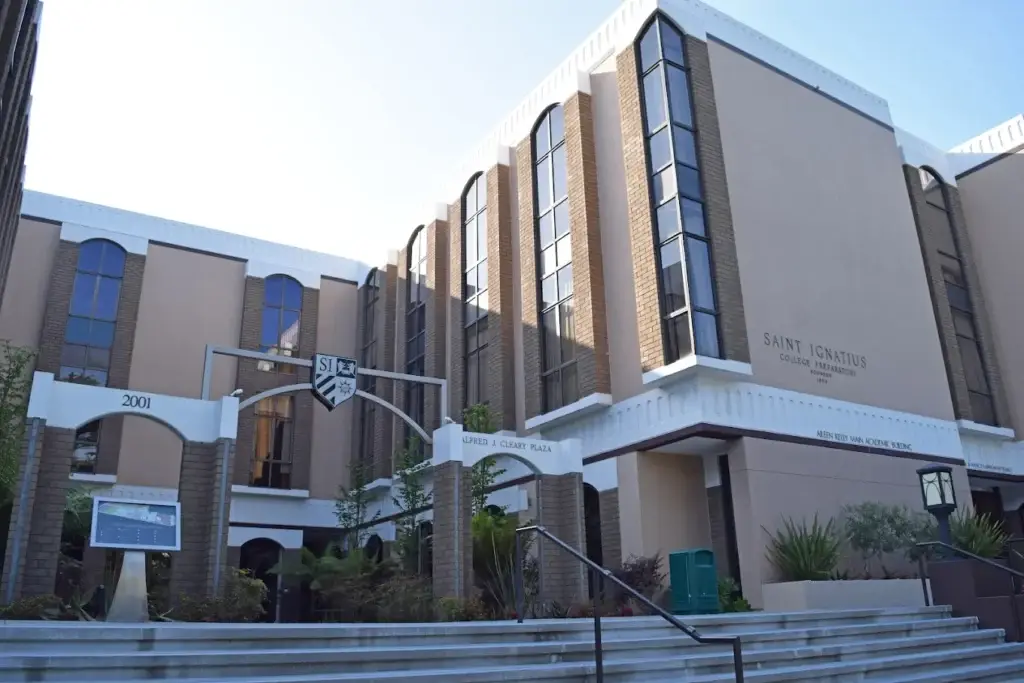
At St. Ignatius College Prep in San Francisco, campus spaces are in constant demand. Between academic events, athletics, practices, clubs, and external groups, the school manages well over 1,000 events per year. Before eSPACE, that level of activity made conflicts inevitable and visibility nearly impossible.
When Jamie Pruden stepped back to assess the problem, the issue was not effort or intent. It was the lack of a single system everyone trusted.
The Challenge: Space Conflicts and No Visibility Into Usage
Before eSPACE, St. Ignatius faced two major challenges.
First, space conflicts were frequent. Groups would arrive to use rooms or fields only to discover another group was already there. Reservations existed in multiple places, if they existed at all, and there was no authoritative source to prevent overlap.
Second, the school had no clear understanding of how spaces were actually being used. Some rooms were occupied nearly 18 hours a day, while others were severely underutilized. Without data, there was no way to balance demand, improve planning, or make informed decisions about campus resources.
What the school needed was not just a scheduling tool, but one system, one contact point, and one place to look.
As Jamie put it, the mindset eventually became:
“If it doesn’t exist in eSPACE, it doesn’t exist.”
The Solution: One System, Shared Accountability, and Custom Workflows
After evaluating roughly eight different platforms, St. Ignatius selected eSPACE for its combination of ease of use, flexibility, and cost.
Implementation focused first on creating a clear rule: if a space was not in eSPACE, it could not be used. Leadership reinforced that policy, which immediately increased accountability and reduced conflict.
The school also implemented external request forms, embedded directly on its website. Anyone requesting a space could submit a form, check for conflicts, receive approval, and move forward without ongoing back-and-forth.
One of the biggest advantages for St. Ignatius was customization.
Different groups see different forms:
- Coaches see only athletic fields and practice spaces
- Other users see only the spaces relevant to them
- External locations (such as off-campus practice fields) are organized clearly but remain under the school’s umbrella
This eliminated long lists, reduced errors, and made scheduling faster for everyone.
When the school encountered scale challenges—such as managing over 100 sports teams, clubs, and groups—eSPACE worked directly with them on custom development, including adding subcategories. That change dramatically simplified navigation and selection for users across campus.
The Results: Fewer Conflicts, More Usage, and Campus-Wide Clarity
After adopting eSPACE, the impact was immediate and tangible.
Conflicts dropped significantly. Jamie described it simply as “a lot less yelling.” With a single system of record, disputes over space all but disappeared.
Leadership and staff gained instant visibility. With the mobile app, anyone could see what was happening on campus at a glance—what spaces were booked, what was available, and what was coming next.
Unexpectedly, space utilization also improved. As users encountered conflicts, eSPACE made it easy to discover alternative spaces that had previously gone unused. More of the campus was used more effectively, without adding complexity.
Most importantly, the shared rule—if it’s not in eSPACE, it doesn’t exist—created alignment across departments and eliminated ambiguity.
Why Jamie Recommends eSPACE
Jamie’s advice to schools considering eSPACE is direct: do it.
He emphasized that while every technology solution must fit an organization’s model, eSPACE stood out during evaluation for balancing usability, flexibility, and affordability—without tradeoffs.
He also pointed to the broader ecosystem as a differentiator. From digital signage with InfoSpace to integrations with access control and building systems, eSPACE allows schools to connect scheduling, facilities, and infrastructure into a single operational layer.
Equally important was support. Jamie highlighted fast response times, practical solutions, and a willingness to collaborate—even on custom development—to solve real-world problems at scale.
For St. Ignatius College Prep, eSPACE is no longer just a scheduling tool. It is the system that keeps a complex campus running smoothly.
Key Takeaway for Private Schools
eSPACE helped St. Ignatius College Prep move from:
- Conflicting calendars → One trusted system
- Guesswork → Campus-wide visibility
- Underused spaces → Smarter utilization
- Manual coordination → Automated, accountable workflows
For schools managing hundreds of events and shared spaces, clarity—not complexity—is the win.